Contact us
Leave Your Message
0%

In the world of engineering, copper alloy castings really hold a special place across a bunch of different applications. I remember reading somewhere that John Smith, a well-known expert at Alloy Innovations, once said, 'Copper alloys have some pretty unique properties that make them perfect for a lot of industries.' That little quote just shows how important these castings are in today’s manufacturing scene.

These copper alloy castings are famous for their top-notch thermal and electrical conductivity — a huge plus for things like electrical components and heat exchangers. But, let’s be real, the process to cast them isn’t always a walk in the park. It can be pretty tricky and needs a lot of skill and precision. Sometimes, defects happen, which means strict quality checks are a must.

A bunch of industries depend heavily on copper alloy castings — think aerospace, automotive, and Marine sectors. Each has its own specific needs, pushing material science to new levels. As we look at the main ways these castings are used, it’s super important to learn from any mistakes we've made along the way. Understanding these lessons can really help us improve both our processes and the products we make.

All in all, copper alloy castings are more than just a material — they’re a fundamental part of modern engineering, shaping how things are built and function every day.
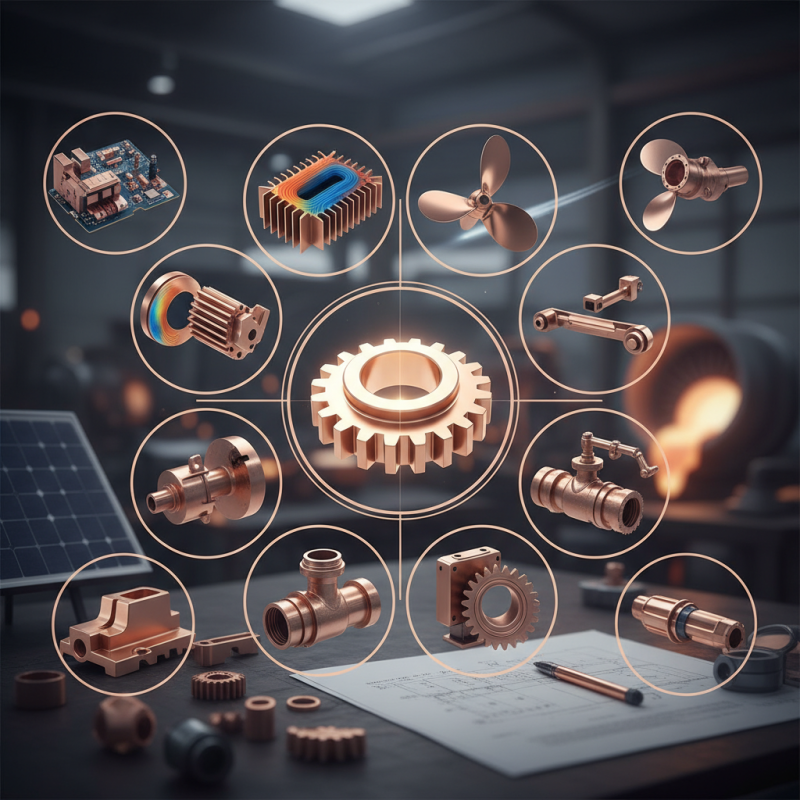
Top 10 Copper Alloy Castings Applications You Should Know?

Overview of Copper Alloys and Their Properties

Copper alloys are versatile materials known for their unique properties. They exhibit excellent electrical and thermal conductivity, making them ideal for various applications. For example, copper-nickel alloys are often used in marine environments due to their corrosion resistance. These qualities help to enhance the lifespan and durability of products. Moreover, the malleability of copper alloys allows for intricate designs and shapes.

Copper Alloy Die Castings represent a significant manufacturing method. This technique enables the production of complex geometries with high precision and minimal waste. However, achieving perfect outcomes can be challenging. Variations in cooling rates during the casting process can lead to defects. These imperfections often require careful examination and adjustments for improvement.

In applications like electronics and plumbing, copper alloys are favored. Their ability to withstand heat and fire adds to their reliability. Yet, the melting point of these alloys can complicate the fabrication process. Maintaining the right temperature is critical, and even a slight deviation can affect quality. Understanding these complexities is essential for optimizing the use of copper alloys and ensuring their effectiveness in real-world applications.

Common Types of Copper Alloys Used in Castings

Top 10 Copper Alloy Castings Applications You Should Know?

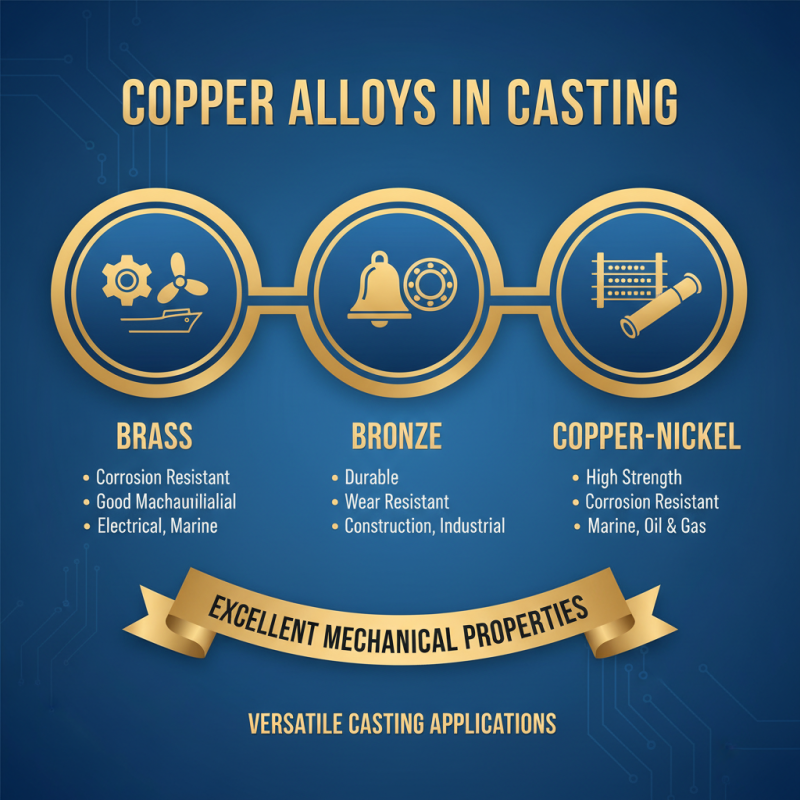
Copper alloys are widely used in various casting applications due to their excellent mechanical properties. Common types of copper alloys include brass, bronze, and copper-nickel. According to industry reports, brass is one of the most popular alloys, known for its strong corrosion resistance and good machinability. Bronze, on the other hand, is recognized for its durability and excellent wear resistance. These features make them ideal for construction, electrical, and marine industries.

Precision Copper Alloy Die Castings are particularly valuable in manufacturing components that require tight tolerances and complex geometries. This process can produce intricate shapes with minimal waste. Statistics show that using a precision approach can reduce material costs by up to 20%. Many industries benefit from these efficiencies, as they help deliver high-quality products faster.

Tip: Always evaluate the environment in which the alloy will be used. Factors like temperature and exposure to chemicals can greatly affect performance. Consider testing prototypes to ensure lasting quality. Understanding the specific requirements of your application can help in selecting the right alloy. Reflection on past projects can lead to better choices in future applications.

Applications in Automotive Industry

The automotive industry heavily relies on the use of copper alloy castings. These materials provide excellent electrical conductivity and corrosion resistance. They are essential for components like connectors and wiring harnesses. Without these, vehicle electronics would fail to perform as expected.

Manufacturers also utilize copper alloy castings in brake systems. These materials improve strength and durability. However, sometimes they don't meet all performance expectations. For instance, varying temperatures can affect the alloy's properties. This creates challenges during manufacturing and application in cars.

Another application is in engine components. Copper alloy can enhance thermal management. This helps engines maintain optimal performance. Yet, challenges remain in balancing costs with quality. Finding the right copper alloy type is also crucial. Some alloys may not perform well under specific conditions. This leads to potential failures that necessitate careful evaluation.

Use in Marine and Shipbuilding Sectors

In the marine and shipbuilding sectors, copper alloys play a vital role. They offer excellent corrosion resistance and durability. These properties make them ideal for various applications in harsh marine environments. For example, copper-nickel alloys are often used in seawater piping systems.
Their ability to withstand biofouling is a significant advantage.

The use of bronze in ship fittings is another common application. Bronze components are strong and resistant to wear. However, not all bronze alloys perform alike. Some may corrode faster than others. It’s crucial to choose the right alloy for the specific marine application.

Tips: When selecting casting materials, consider environmental factors. Saltwater can be particularly harsh. Conduct thorough testing of any alloy you plan to use. Understand its limitations. Regular inspections can help identify potential issues before they worsen. Remember, maintaining equipment is as important as selecting it.

Implementations within Electrical and Electronic Devices

Copper alloys have many applications in electrical and electronic devices. Their excellent conductivity makes them ideal for various components. According to a recent industry report, nearly 70% of all copper alloy usage is in electrical applications. This high demand is driven by the need for reliable and efficient energy transmission.

Switchgear and connectors often use copper alloy castings. These components require durability and resilience under stress. The report highlights that the failure rate for devices not using copper alloys is significantly higher. Moreover, the alloy's resistance to corrosion is vital for longevity. Some manufacturers still overlook the importance of alloy selection. Poor choices can lead to device malfunctions.

Moreover, the use of copper alloys in circuit boards is on the rise. They provide enhanced thermal management, crucial for high-performance devices. However, some engineers neglect to consider the thermal expansion properties of different alloys. This can lead to issues during temperature fluctuations. The industry must focus on educating its workforce on these critical aspects. Only then can the full potential of copper alloy castings be realized in modern technology.

Top 10 Copper Alloy Castings Applications in Electrical and Electronic Devices

Role in Plumbing and Heating Systems

Copper alloys play a crucial role in plumbing and heating systems. Their unique properties make them both durable and efficient. According to industry reports, copper and its alloys account for over 70% of plumbing materials used globally. This high percentage highlights the trust placed in copper alloy castings for long-term reliability.

In heating systems, Copper Alloy Extrusions are favored for their excellent thermal conductivity. They transfer heat efficiently, reducing energy bills. However, corrosion can be a concern, especially in harsh environments. Regular maintenance is essential to ensure longevity.

Tips: Always check for signs of wear and tear in your plumbing. Investing in quality materials will save you money on repairs. When selecting copper alloy castings, consider their environmental impact. Some alloys are more sustainable than others, impacting overall performance. Consider this when making your choice.

Copper alloys continue to prove their worth in plumbing and heating. Their adaptability ensures that they remain a top choice across many applications. However, understanding potential drawbacks is crucial for making informed decisions.

Emerging Trends in Copper Alloy Casting Technologies

Copper alloy casting technologies are evolving rapidly. These innovations are driven by the demand for lightweight and durable materials. Industries seek better performance in applications ranging from automotive parts to electronic components. One emerging trend is the integration of advanced modeling software. This technology enables precise simulations during the casting process. It minimizes defects and enhances efficiency.

Another noteworthy trend is the focus on eco-friendly practices. Many manufacturers are exploring ways to recycle copper alloys. This shift not only reduces waste but also cuts production costs. Various techniques are being developed to improve the mechanical properties of recycled materials. However, quality control remains a challenge. Maintaining consistency in recycled alloys requires rigorous testing and adjustments.

Additive manufacturing, or 3D printing, is also making waves in copper alloy casting. It allows for complex geometries that traditional methods cannot achieve. This technique can reduce material waste significantly. Yet, the learning curve for operators can be steep. There are still unforeseen issues to tackle, such as post-processing requirements and layer adhesion. The path forward appears promising, but there are complexities to understand and resolve.

FAQS

: What are the key properties of copper alloys?

: Copper alloys are known for excellent electrical and thermal conductivity. They are versatile and durable materials.

Why are copper-nickel alloys used in marine applications?

They offer great corrosion resistance and can withstand biofouling, making them suitable for seawater systems.

What challenges exist in the die casting process of copper alloys?

Achieving perfect outcomes can be difficult due to variations in cooling rates, leading to potential defects.

How does temperature affect copper alloy fabrication?

Maintaining the right temperature is critical. A slight deviation can impact the quality and performance of the alloy.

What should be considered when using bronze in marine applications?

Not all bronze alloys perform the same. Some may corrode faster, making alloy selection crucial for durability.

Why is regular inspection important for copper alloys?

Regular checks help identify potential issues early, ensuring the reliability of equipment in harsh conditions.

How can environmental factors impact the performance of copper alloys?

Factors like saltwater can be harsh. Thorough testing is necessary to understand limitations and suitabilities.

What is the significance of malleability in copper alloys?

Malleability allows for intricate designs and shapes, enhancing the versatility of copper alloys in various applications.

What is a common application of copper alloys in plumbing?

Their heat and fire resistance make them favored in plumbing systems, ensuring reliability and safety.

Are there disadvantages to using copper alloys?

Yes, they may have imperfections that require examination and adjustments for optimal performance in specific applications.

Conclusion

Copper alloy castings are integral to various industries due to their excellent thermal, electrical, and mechanical properties. This material, characterized by its corrosion resistance and high conductivity, is widely used in automotive applications like engine components and connectors. In the marine and shipbuilding sectors, copper alloy castings help prevent corrosion in harsh environments.

Additionally, these castings are crucial in electrical and electronic devices where reliable connections are vital. They also play a significant role in plumbing and heating systems, ensuring durability and efficiency. As technology advances, emerging trends in copper alloy casting processes continue to enhance their performance and applicability, making them essential in modern manufacturing and engineering solutions.

Charlotte

Charlotte

Charlotte is a dedicated marketing professional at Shaanxi Brilliant Machinery Co., Ltd., where she plays a pivotal role in communicating the company’s vision of becoming the global benchmark for manufacturing excellence, sustainability, and customer satisfaction in the mechanical parts industry.......
Previous Maximizing Value with Cold Forged Fasteners How to Reduce Maintenance Costs Effectively